
How to Identify Poisonous Mushrooms: Warning Signs and Safety Limits
Practical guidance on how to identify poisonous mushrooms from photos, what visual clues matter, and exactly when to seek expert verification or emergency help.
What is possible
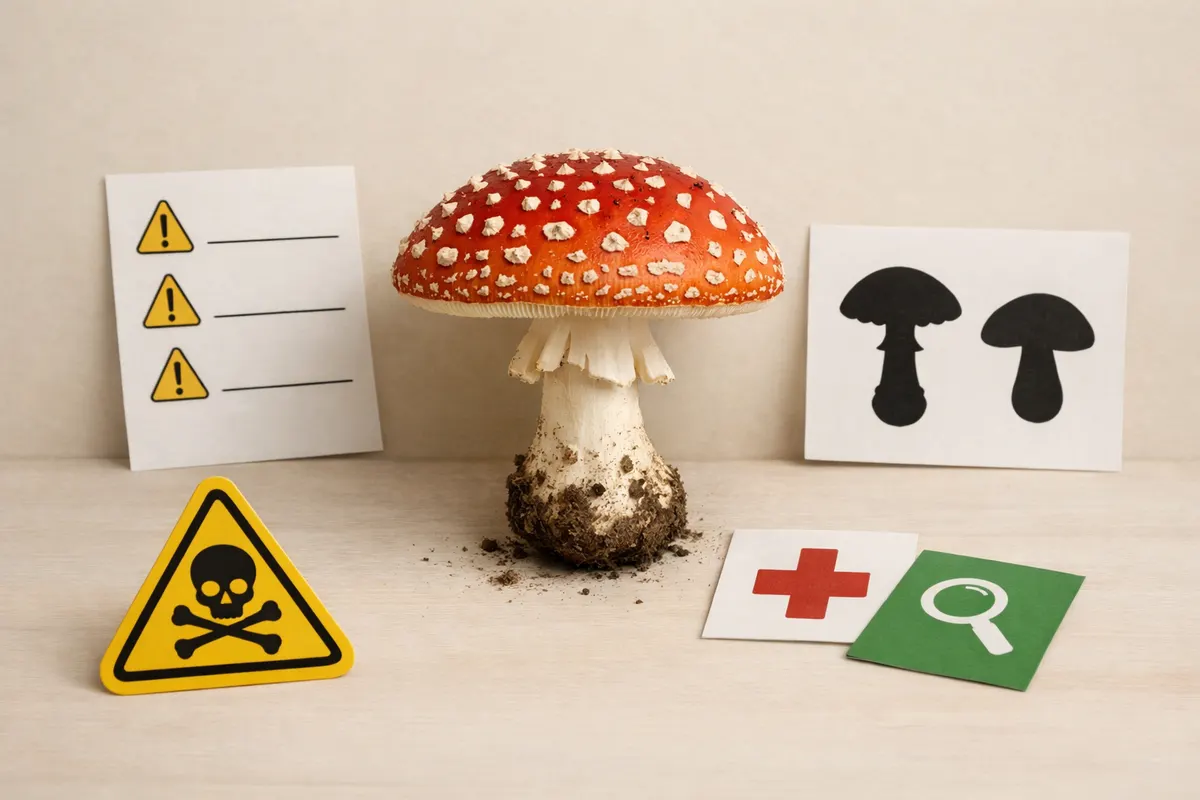
When you ask how to identify poisonous mushrooms from a photo, it helps to set realistic expectations. A clear, well-composed image can reveal stable, diagnostic features—cap shape, gill attachment, stem details, color zones, and growth substrate—that let an experienced eye narrow the list of likely genera or flag known dangerous groups.
Smart visual tools can speed this narrowing process. They can compare your photo to documented specimens, surface common lookalikes, and highlight features that matter for safety checks. That reduces the search space from hundreds of possibilities to a manageable handful that deserve closer scrutiny.
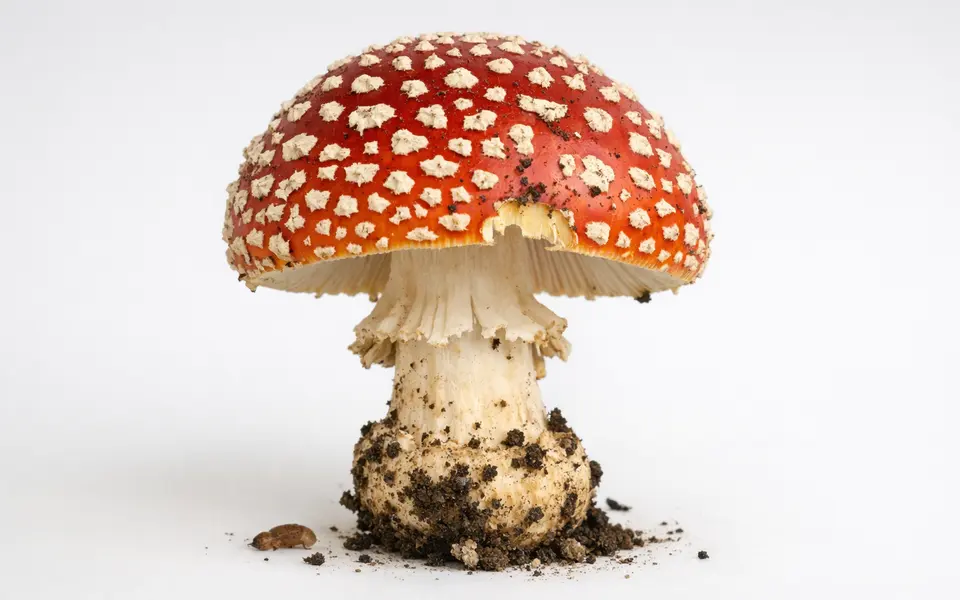
Visual analysis is especially helpful for spotting high-risk visual patterns. For example, images that show a volva at the stem base, a persistent ring, or white gills on a large meaty cap can point toward groups that include deadly species. Flagging those patterns early is a practical safety step: it tells you to stop, secure the specimen, and seek verification before any handling beyond photographing.
Use photographic results as an informed first pass, not a final verdict. If you want step-by-step help identifying structural details—cap texture, gill spacing, spore print color—our Mushroom Identification Guide: Cap, Gills, Stem, Habitat, and Spore Print explains how to capture and interpret those clues in more depth (https://mushroomidentification. app/blog/mushroom-identification-guide).
- You can often narrow candidates by visible traits: cap shape, gill attachment, stem features, surface texture.
- Photos make it easier to compare your specimen to documented lookalikes and known poisonous genera.
- High-risk visual flags can be spotted from pictures and should trigger expert verification.
- A photo-based result is a hypothesis—use it to decide whether to stop, document more, or consult an expert.
What is not possible
Photos, even excellent ones, cannot prove edibility or toxicity. Many toxic compounds act at a chemical level invisible to the eye. Two mushrooms that look nearly identical at all macroscopic scales can differ dramatically in toxicity—sometimes because of microscopic features, chemistry, or even environmental uptake of toxins.
A single image cannot capture internal features or microscopic spore ornamentation that are often required for a conclusive species-level identification. Nor can a photo show whether a mushroom has accumulated pollutants, pesticides, or heavy metals, which affect safety but not visible form.
Automated tools and apps should never be treated as a replacement for professional verification when health is at stake. They can suggest possibilities and highlight risks, but they cannot certify a mushroom as safe to eat. That boundary matters: following it prevents avoidable poisonings and legal or medical missteps.
- You cannot confirm edibility or toxicity from photos alone.
- Microscopic features and chemical assays are sometimes required for species-level certainty.
- Age, drying, or damage can change appearance enough to mislead photo-based ID.
- Environmental contamination and internal parasites are invisible in photos and affect safety.
Visual clues
Before you rely on a photo for how to identify poisonous mushrooms, collect images that capture the stable clues experts use. Take a clean sequence: a wide contextual shot showing habitat, a mid-range view of the whole mushroom, and close-up images of the cap surface, underside (gills, pores, or teeth), stem base, and any ring or volva.
Key visible details that carry weight in a first-pass assessment include cap shape and texture (smooth, scaly, sticky), gill attachment (free, adnate, decurrent), presence or absence of a ring or volva at the stem base, color bruising or staining when touched, and growth pattern (single, clustered, in rings). Note the substrate—wood, soil, grassy turf—and whether the specimens are solitary or in groups.
Photo quality matters. Use natural light, place a ruler or coin for scale, and stabilize close-ups so gill edges and cap margins are sharp. If possible, photograph both young and mature examples of the same fruiting body: some species change key characters as they age. Avoid washed-out or heavily filtered images—accurate color and texture are central to useful comparisons.
Some clues require simple, safe follow-up steps you can document for experts: a spore print (left on paper for a few hours) can reveal spore color, and a clean cross-section can show internal structure. Only perform these when you are careful and plan to consult an expert; do not taste or ingest any sample to test it.
- Photograph multiple angles: habitat, whole mushroom, underside, stem base, cross-section.
- Include a scale object (ruler or coin) and use natural light for accurate color and texture.
- Record substrate and nearby trees or plants—ecology is a key identification clue.
- Capture any bruising or color changes after gentle handling; these can help narrow matches.
- When safe, a spore print is a highly informative addition for verification.
Verification path
If a mushroom might be poisonous, move from photo-based suspicion to verified evidence in deliberate steps. First: do not taste or swallow any part of the specimen. Secure a sample in a breathable paper bag or waxed paper (avoid airtight plastic that speeds decay) and keep a photographic record with clear views of the diagnostic features described above.
Next, reach out to a qualified local source. Local mycological societies, university extension services, and certified mushroom clubs are typically able to provide in-person or expert-reviewed identifications. Provide them with your photos, location, habitat notes, and any spore print or cross-section samples you safely collected. In many regions, mycologists will ask for living or freshly collected specimens for confirmation.
If ingestion or severe exposure is suspected, treat it as a medical emergency. Contact your local poison control center immediately—if you are in the United States call 1-800-222-1222—or seek emergency medical care. Bring photos, any remaining mushroom material, and notes on the time and quantity consumed. Speed matters: many mushroom toxins act on the liver, kidneys, or nervous system and may require prompt clinical intervention.
For non-urgent confirmation (foragers, chefs, educators), lab-level analysis such as microscopy, chemical assays, or DNA sequencing can provide definitive species-level identification. Those options are usually performed by specialized laboratories and should be pursued when a reliable identification is essential—for example, when creating a voucher specimen for toxicology or research.
- Do not taste. Secure the specimen in breathable packaging and photograph it thoroughly.
- Contact local experts: mycological societies, extension services, or certified identifiers.
- If ingestion is suspected, call poison control (U. S. 1-800-222-1222) or emergency services immediately.
- For absolute confirmation, labs can perform microscopy, chemical tests, or DNA sequencing—use these only when needed.
Related guides
Use Fungio as a research aid — but seek expert confirmation for safety
Download Mushroom Identifier: Fungio on your phone to document and compare suspect mushrooms quickly. Use the app to collect clear photos and flag risky features, then contact a local mycological expert or poison control if toxicity is possible. For suspected ingestion, call your local poison control center or emergency services immediately (in the U. S. 1-800-222-1222).
Take the next step →Frequently asked questions
Can I tell if a mushroom is poisonous from a single photo?
Not reliably. A single clear photo can reveal warning features and narrow possibilities, but it cannot prove toxicity or edibility. Treat a photo-based ID as a hypothesis that should trigger further documentation or expert review before any consumption.
What visual features most commonly indicate dangerous lookalikes?
High-risk visual flags include a volva at the stem base, a persistent ring, white gills on a large fleshy cap, and sudden bruising or color changes. These features are associated with groups that include deadly species, so their presence should prompt immediate verification.
If someone may have eaten a poisonous mushroom, what should I do right now?
If ingestion is suspected, call your local poison control center or emergency services without delay. In the U. S. contact 1-800-222-1222. Bring photos, the remaining specimen, and a note of the time and amount consumed to the hospital—medical teams will use that information for treatment decisions.
Can an app like Fungio replace an in-person expert?
No. Apps are valuable for research, rapid comparison, and flagging potential risks, but they cannot replace hands-on expert verification when safety is on the line. Use the app as a first pass and then consult local mycologists or extension services for definitive advice.