
Parasol mushroom
Learn which parasol mushroom identification details a photo can prove, which it cannot, and which follow-up checks matter before relying on the result.
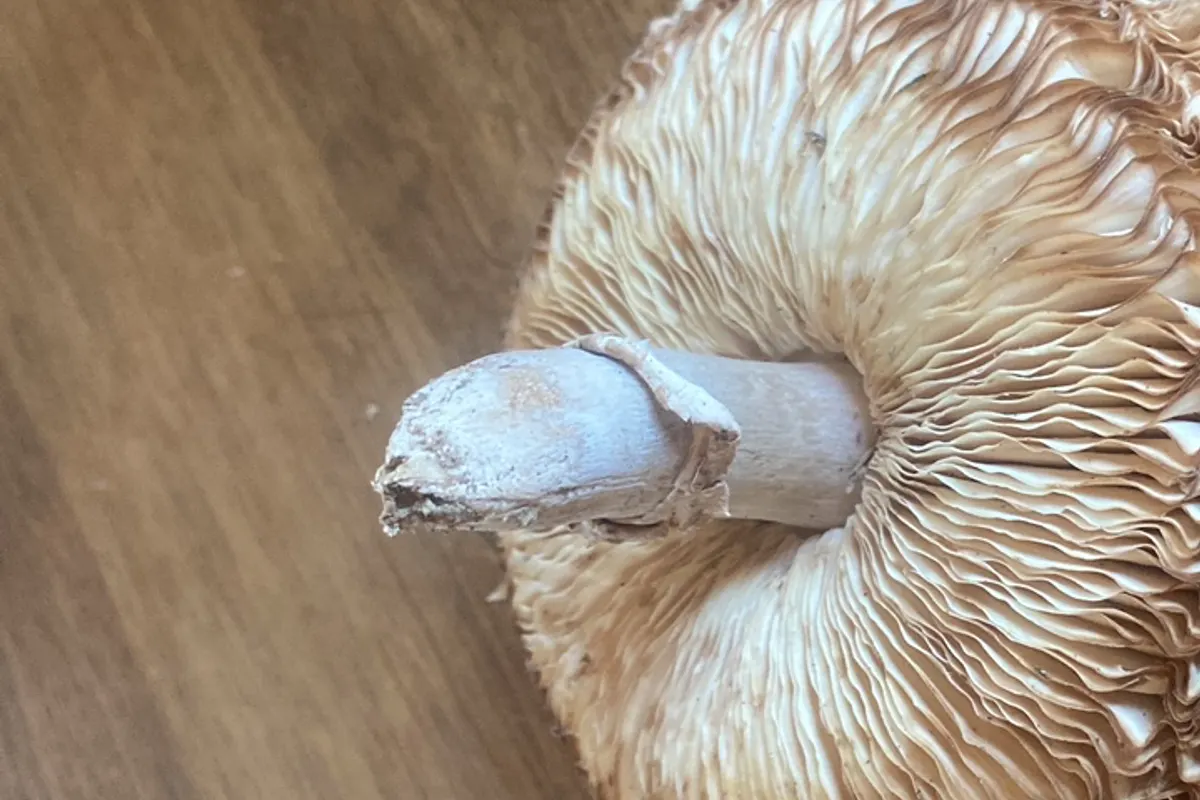
Identification summary
This entry records a single scan submitted to the site’s scans collection and identified as a parasol example in the project database on 2026-09-13T15:12:39.238Z.
The scan metadata contains no confidence score and no additional attribute fields, so the record serves as an editorial example of how limited scan data can be reported and interpreted.
Because the scan fields are empty, the write-up focuses on which parasol mushroom identification clues a photo alone can support and which checks remain necessary before any edibility conclusions.
Source
| Source | scans |
|---|
Identified At
| Identified At | 2026-09-13T15:12:39.238Z |
|---|
Confidence
| Confidence | Not provided in scan |
|---|
Scan Fields
| Scan Fields | No attribute fields supplied in scan |
|---|
Estimated Value
| Estimated Value Range | Not provided in scan |
|---|
Rarity
| Rarity | Not provided in scan |
|---|
Notes
| Notes | This record is an identification-example entry; no photographic observations are described here. |
|---|
Historical context
Parasol-type mushrooms (commonly referenced among field guides) are a well-known group in edible mushroom literature because several species are both distinctive and widely collected.
This example is presented to show how a scan record with minimal metadata is reported; it does not substitute for field checks that determine edibility or species-level certainty.
More Edible Mushroom Identification identifications
Keep identifying
Read the full category guide for the visual clues behind this identification.
Edible Mushroom Identification: Visual Clues, Examples, and Safe Next StepsRelated guides
Have your own edible mushroom identification identified
After you gather cap, gill, stem-base, and habitat shots, use Mushroom Identifier: Fungio to sort your photos and compare visible clues side-by-side. Treat the app as a way to assemble evidence for review—not a substitute for spore prints or a professional check. Start with the site’s identification resources and try the photo-organizing tool here: https://mushroomidentification.app/tools/free-mushroom-identifier.
Take the next step →Frequently asked questions
How does this scan help with edible mushroom identification if I plan to eat it?
A single scan with only a timestamp is useful as a record but not enough to conclude edibility. For safe edible mushroom identification you need corroborating evidence: clear photos of cap, gills, stem base, a spore print, habitat notes, and ideally an expert cross-check. Treat this scan as the start of evidence-gathering rather than the final answer.
What can one photo realistically prove about a parasol mushroom?
A single clear photo can indicate group-level traits—cap shape, overall size, and surface texture—that suggest a parasol-type mushroom. However, photos rarely confirm microscopic features, spore color, or stem-base structures, and they cannot alone rule out similar toxic species. Use photos to narrow possibilities and plan follow-up checks.
How should I handle lookalikes that resemble parasol mushrooms in photos?
When a photo suggests a parasol, explicitly compare it against known lookalikes: check gill attachment, ring persistence, spore print color, and habitat. If any required detail is missing from photos or metadata, refrain from concluding species identity. In uncertain cases, seek local expert input or additional field data before acting on the identification.
When is it appropriate to consult a local mycologist after a scan?
Consult a local mycologist whenever the scan lacks critical details (spore print, stem base, habitat) or when you intend to consume a specimen. Local experts can examine fresh material, run tests not possible from photos, and reduce risk by providing a higher-confidence identification.